Why One Chip Fab Needs Dozens of Hidden Partners
In this story
When people talk about Dholera’s chip fab, they picture one giant building full of machines. But a fab is only the tip of the iceberg. Behind every wafer sits a hidden network of companies making ultra-pure chemicals, specialty gases, silicon wafers, precision parts and services. Together, they form the semiconductor ecosystem, and no fab in the world can run without it.
Why should Dholera watchers care? Because the ecosystem is where much of the growth happens. One fab can attract dozens of suppliers, each with its own plant, warehouse, offices and staff. That is how a single factory turns into an industrial city.
So what exactly does a fab need, and who might come to Dholera next?
A quick recap. Tata Electronics is building a 300mm fab in Dholera Special Investment Region, with a planned investment of about US$11 billion (roughly ₹91,000 crore) and capacity for up to 50,000 wafers a month at full production. It is using process technology licensed from Taiwan’s PSMC, with equipment and support from global leaders like ASML and Tokyo Electron. Trial production has been targeted for late 2026.
That is the anchor. Now comes the harder part: building everything around it.
The 6 Pillars of a Semiconductor Ecosystem
Every fab relies on six broad groups of partners:
- 1. Equipment makers: lithography, etch, deposition, cleaning and inspection tools, from companies like ASML and Tokyo Electron.
- 2. Materials suppliers: silicon wafers, photoresists, CMP slurries and thin-film materials.
- 3. High-purity chemicals: acids, solvents and cleaners far purer than anything used in normal industry.
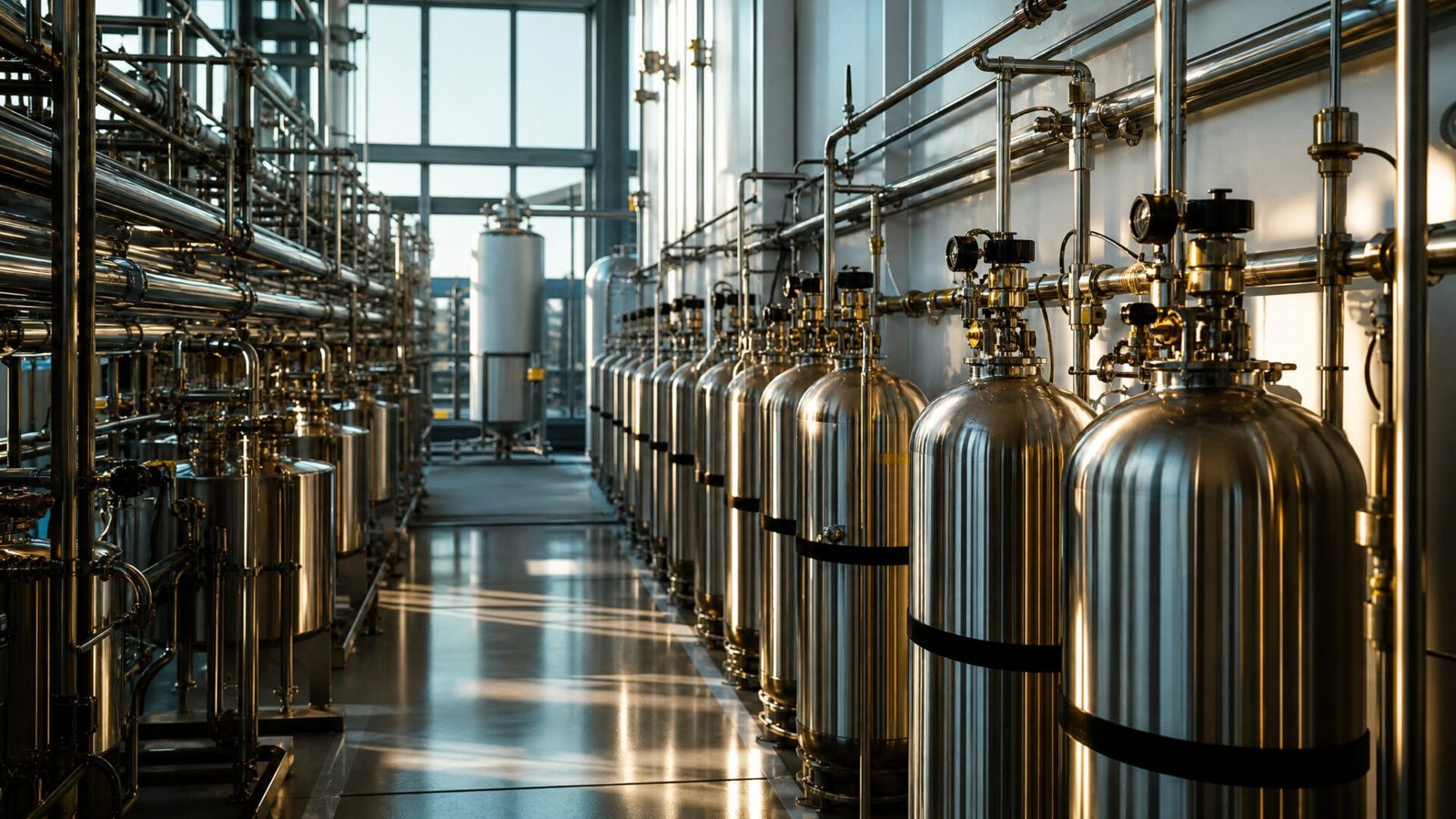
- 4. Specialty gases: nitrogen, argon and specialised process gases, delivered through dedicated pipelines.
- 5. Utilities and services: ultrapure water, clean power, tool installation, maintenance and waste handling.
- 6. Back-end partners: assembly, testing and packaging, such as Tata’s facility in Assam.
Why suppliers want to be close
Semiconductor materials are sensitive, expensive and needed constantly. Importing them from far away adds cost, delay and risk. That is why chemical and gas suppliers often build plants right next to major fabs, sometimes connected by pipelines. For a new semiconductor ecosystem, attracting these suppliers is one of the most important steps toward self-reliance.
How other countries built their semiconductor ecosystem
Taiwan, South Korea and Japan did not build their chip industries around single factories. They built dense clusters where fabs, suppliers, universities and service companies sit close together. In those places, a supplier can reach a customer within minutes, engineers move between companies, and new ideas spread quickly. That density is one of the main reasons those regions dominate global chipmaking today.
India is now trying to create its own version of that model, and Dholera is one of its most important test cases. Building a full semiconductor ecosystem takes years and requires patient government support, strong infrastructure and a steady flow of trained people. But every new supplier that arrives makes the next one more likely to follow, because the cluster becomes more useful to everyone in it.
- Proximity: suppliers close to fabs cut costs and delays.
- Talent: clusters create a shared pool of skilled workers.
- Momentum: each new arrival makes the region more attractive to the next.
Chemicals: The Most Underrated Part of the Semiconductor Ecosystem
Making a chip can involve hundreds of steps, and many of them use chemicals: photoresists to capture circuit patterns, etchants to carve them, slurries to polish wafers flat, and cleaners to remove even the tiniest particles. These chemicals must be extraordinarily pure, often measured in parts per billion or less. A single contaminant can ruin a batch of wafers worth crores.
That is why high-purity chemical makers are among the most valued members of any semiconductor ecosystem. Japan, the US, Europe, South Korea and Taiwan dominate this market today. For India, persuading leading chemical and materials companies to build plants locally would be a major milestone.

Who Might Follow Into Dholera?
No one can predict exact names, but based on how fab clusters grow elsewhere, the likely next arrivals include:
- Chemical and materials makers: suppliers of photoresists, slurries, high-purity acids and solvents.
- Industrial gas companies: firms that build on-site or nearby gas plants for fabs.
- Engineering specialists: companies that design and install the complex piping and systems that connect tools to utilities.
- Parts and maintenance providers: suppliers of spare parts, cleaning and refurbishment services.
- Equipment service centres: local offices for the tool makers already involved.
Japan in particular is a global leader in many semiconductor materials and chemicals. Its companies have a long record of following major customers into new regions, as we explored in our story on Japanese companies in Dholera.
Signals to watch
Keep an eye on memorandums of understanding between Tata Electronics and suppliers, land allotments near the fab, and announcements of chemical or gas plants in Dholera SIR. Each one strengthens the local semiconductor ecosystem and shows that the fab’s supply chain is taking root in Gujarat.
The challenges ahead
Building a semiconductor ecosystem from scratch is not easy. Suppliers want to see steady demand before they invest, while fabs want reliable local supply before they scale up. Specialised chemicals and gases need strict safety rules, skilled staff and dependable utilities. Breaking this chicken-and-egg problem usually takes government incentives, anchor customers and time. Dholera has the anchor and the policy support; the next few years will show how quickly the rest of its semiconductor ecosystem fills in.

What a Growing Semiconductor Ecosystem Means for Dholera
The difference between a single factory and an ecosystem is huge. An ecosystem means:
- More jobs: chemists, engineers, technicians, logistics staff and service workers.
- More land use: industrial plots, warehouses and pipelines near the fab.
- More stability: a cluster of companies is less dependent on any single employer.
- More skills: local talent grows as companies train staff, supported by partners like ASML.
- More demand: for housing, offices, shops and services around the industrial zone.
That is why Dholera’s plug-and-play land, water and power matter so much. They make it easier for suppliers to follow the fab. Read more in our story on plug-and-play infrastructure.
Jobs beyond the fab
Most people imagine chip jobs as engineers in white suits inside cleanrooms. In reality, a large share of the work in a semiconductor ecosystem happens outside the fab: drivers delivering chemicals, technicians maintaining gas systems, lab staff testing materials, warehouse teams managing spare parts, and office staff handling orders and quality paperwork. Many of these roles need vocational training rather than advanced degrees, which means the ecosystem can create opportunities for local people as well as specialists from elsewhere.
That wider base of jobs is what gives a city staying power. A single factory can slow down or change its plans. A full cluster of suppliers and service companies spreads risk and keeps the local economy moving. For Dholera, building that broader base is the key to turning one landmark investment into a lasting industrial city.
What It Means for Land Buyers
As a semiconductor ecosystem grows, demand typically rises first for industrial and logistics land near the fab, then for housing and commercial space in well-connected areas. But growth takes years, and not every plot benefits equally. Focus on approved, clear-title land with real access to the SIR, the expressway and the airport. Gulfin Aerocity near Pipli junction is one option. As always, returns depend on market conditions.
The Iceberg Beneath the Fab
The Tata fab is the part of the iceberg everyone can see. The semiconductor ecosystem is the much larger part beneath the surface: the chemical plants, gas facilities, service centres and suppliers that make chips possible. As more of that iceberg forms in Dholera, the city moves from hosting a factory to hosting an industry.
We share semiconductor updates on LinkedIn. For background on the fab’s global backers, read our story on the Tata ASML partnership, and see the Tokyo Electron–Tata announcement.
So the next time you read about a new supplier signing up with Tata Electronics, remember that it is not just one more headline. It is another piece of the iceberg forming beneath Dholera, and another step toward a complete, self-sustaining chip industry in Gujarat.
Semiconductor Ecosystem: FAQs
What is a semiconductor ecosystem?
The network of companies a chip fab depends on: equipment makers, materials and chemical suppliers, gas providers, utilities, service firms and packaging partners.
Why do chip fabs need so many suppliers?
Making chips involves hundreds of steps using specialised tools, ultra-pure chemicals and gases, and constant maintenance, which no single company can provide alone.
Which companies already support Dholera's fab?
PSMC provides process technology, while ASML and Tokyo Electron have partnerships with Tata Electronics covering equipment and training.
Who might set up next in Dholera?
Likely candidates include high-purity chemical makers, industrial gas companies, engineering specialists and parts and service providers.
How does the ecosystem affect Dholera real estate?
Suppliers need industrial land, warehouses and staff housing, which can raise demand over time, though price growth is never guaranteed.
Follow Gulfin Developers
Site walkthroughs, Dholera updates and new launches, first on our channels.
Recent Posts