Chips vs Chemicals: The Secret Link in Dholera
In this story
Ask most people what goes into a computer chip and they’ll say silicon. That’s true, but it’s only part of the story. Before a single chip is finished, its wafer is coated, exposed, developed, etched, cleaned and polished again and again, and almost every one of those steps uses semiconductor chemicals. No chemicals, no chips. It’s that simple.
That’s why the two biggest names in Dholera’s chip story are so closely linked. Tata Electronics is building a ₹91,000 crore fab. Fujifilm has committed about ₹800 crore to a materials plant right beside it. One makes chips. The other will help supply what chips are made with.
So how exactly does this link work, and why does it matter so much?
A quick recap. In September 2026, Fujifilm and Tata Electronics announced a strategic partnership, including an MoU for a phased semiconductor materials plant in Dholera SIR. According to a Business Standard report, the first phase will focus on front-end process chemicals, with commercial production targeted for 2027–28, and Tata Electronics will be an important early customer. Read our breakdown of the deal in Fujifilm just bet ₹800 crore on Dholera.
Where Semiconductor Chemicals Are Used
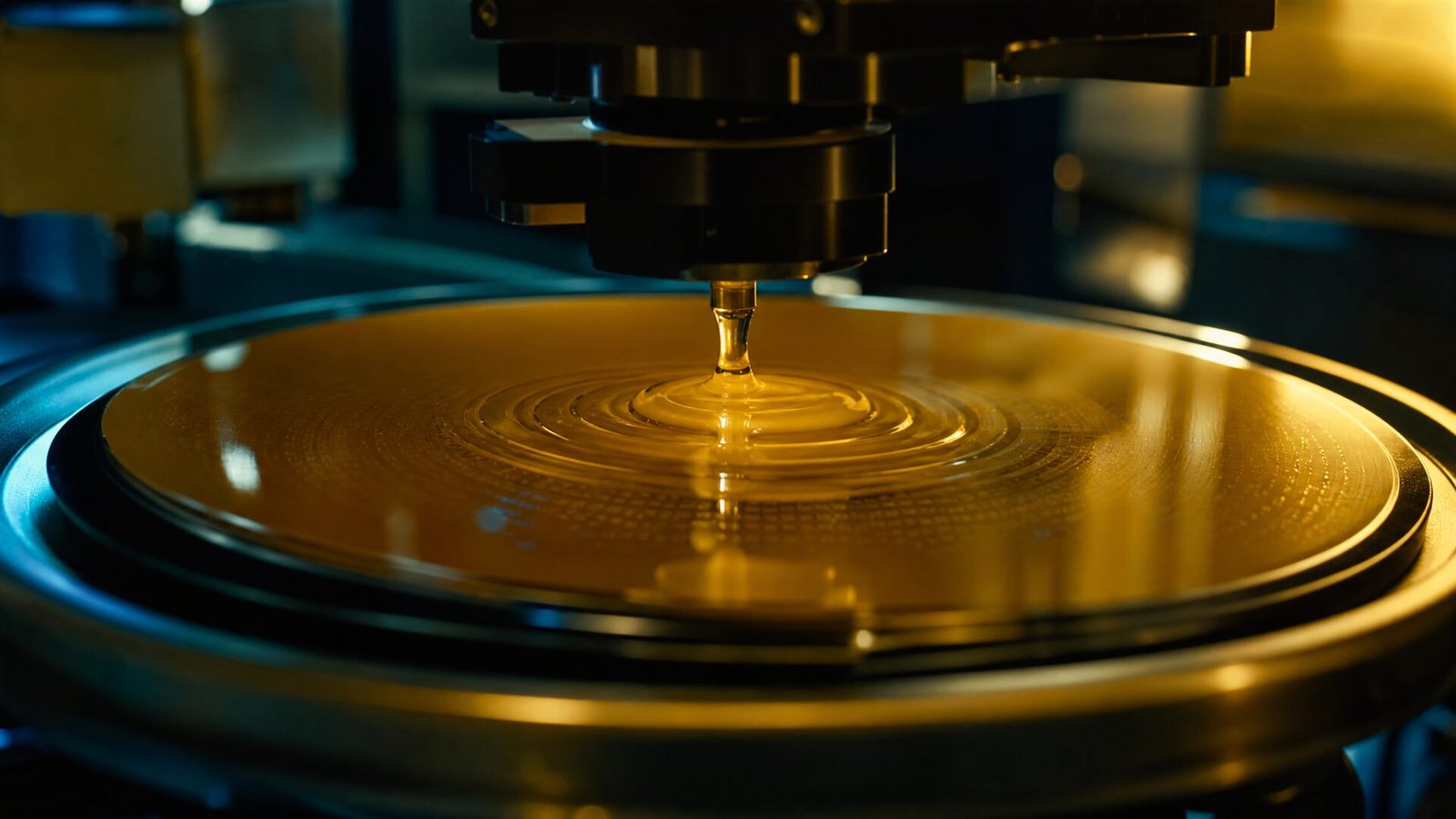
Chipmaking is split into “front-end” steps, where circuits are built on the wafer, and “back-end” steps, where chips are cut, packaged and tested. Front-end processing is where most semiconductor chemicals are consumed:
- Photoresists: light-sensitive coatings that capture circuit patterns during lithography.
- Developers: solutions that wash away exposed or unexposed resist to reveal the pattern.
- Etchants: acids and chemistries that carve patterns into the layers below.
- Cleaning chemicals: ultra-pure acids, solvents and cleaners that remove residues between steps.
- CMP slurries: fine abrasive liquids that polish wafers perfectly flat.
A single wafer can pass through hundreds of process steps, and many of them rely on a different chemical.
Purity beyond imagination
Ordinary industrial chemicals might be 99% pure. Semiconductor chemicals often need impurities measured in parts per billion or even lower. At that level, a trace of metal or a single particle can create a defect that ruins a chip. That’s why only a handful of companies worldwide can make these chemicals reliably, and why Fujifilm’s arrival matters.
A day in the life of a wafer
To see how much a fab depends on semiconductor chemicals, follow one wafer through part of its journey. First, it is cleaned with ultra-pure acids and water to remove any trace of dust. Then a thin film is deposited on its surface. Next, it is coated with photoresist, exposed to light through a pattern, and developed to reveal the design. Etchants carve that design into the film. The remaining resist is stripped away with more chemicals, and the wafer is cleaned again. Finally, a CMP slurry polishes it flat before the next layer begins.
That sequence may repeat dozens of times for a single chip, and every repetition consumes semiconductor chemicals. Multiply that by tens of thousands of wafers a month, and you begin to see why a steady, local supply matters so much to a fab like Tata’s.
- Clean: ultra-pure acids, solvents and water.
- Coat and pattern: photoresists and developers.
- Etch: specialised etching chemistries.
- Polish: CMP slurries and post-CMP cleaners.
Why Tata's Fab and Fujifilm's Plant Need Each Other
The relationship works both ways:
- The fab needs steady supply: a 300mm fab designed for up to 50,000 wafers a month consumes semiconductor chemicals continuously. Running short even briefly can halt production.
- The supplier needs a big customer: a materials plant needs reliable demand to justify its investment. Tata’s fab provides that anchor.
- Both need quality: materials must be tuned to each fab’s processes. Being neighbours makes close cooperation much easier.
- Both need speed: when a fab adjusts a recipe, a nearby supplier can respond in days rather than weeks.
Fujifilm India MD Koji Wada has said the company expects more front-end manufacturing facilities to come up in India, so the Dholera plant is designed to serve more than one customer over time.
The shipping problem it solves
Many semiconductor chemicals are hazardous, sensitive to temperature and have limited shelf lives. Shipping them across oceans adds cost, paperwork and risk. A plant in Dholera cuts that journey to a short drive, making supply more predictable and reducing the chance of delays.
Safety comes first
Many semiconductor chemicals are hazardous if handled carelessly, so plants that make and use them follow strict safety rules. That includes dedicated storage, leak detection, emergency response plans and trained staff. Dholera’s planned utilities, command and control centre and funded fire services help support that kind of operation. For a region hoping to host more suppliers of semiconductor chemicals, strong safety systems are not optional; they are part of the invitation.
From Imports to Indian Supply Chains
Fujifilm’s plan isn’t only about making semiconductor chemicals in India. It’s also about building Indian suppliers. Reports on the deal describe a strategy of initially importing raw materials, then partnering with Indian companies, guiding them with manufacturing and technical know-how, supporting technology transfer and eventually buying from them.
- Stage 1: import key raw materials and produce locally.
- Stage 2: train Indian partners to semiconductor-grade standards.
- Stage 3: source more ingredients within India.
If that works, India could develop a genuine semiconductor chemicals industry, not just a single foreign plant.
Who else supplies a fab?
Chemicals are only one part of a fab’s shopping list. It also needs silicon wafers, specialty gases such as nitrogen and argon, ultrapure water, spare parts and a long list of consumables like filters, gloves and cleanroom garments. Each of these is a potential business opportunity for suppliers who set up nearby. In mature chip regions, dozens of such companies surround every major fab, often in dedicated supplier parks.
Dholera has already begun to attract equipment partners like ASML and Tokyo Electron, infrastructure specialists like Kelington and now a materials leader in Fujifilm. If gas companies, wafer suppliers and parts makers follow, the region could develop the kind of dense supplier network that makes a fab truly competitive. Semiconductor chemicals are just the start of that story.
- Gases: bulk and specialty gases, often supplied by pipeline.
- Wafers: high-quality silicon substrates.
- Consumables: filters, cleanroom garments and spare parts.
- Services: maintenance, waste handling and testing labs.
What It Means for Dholera
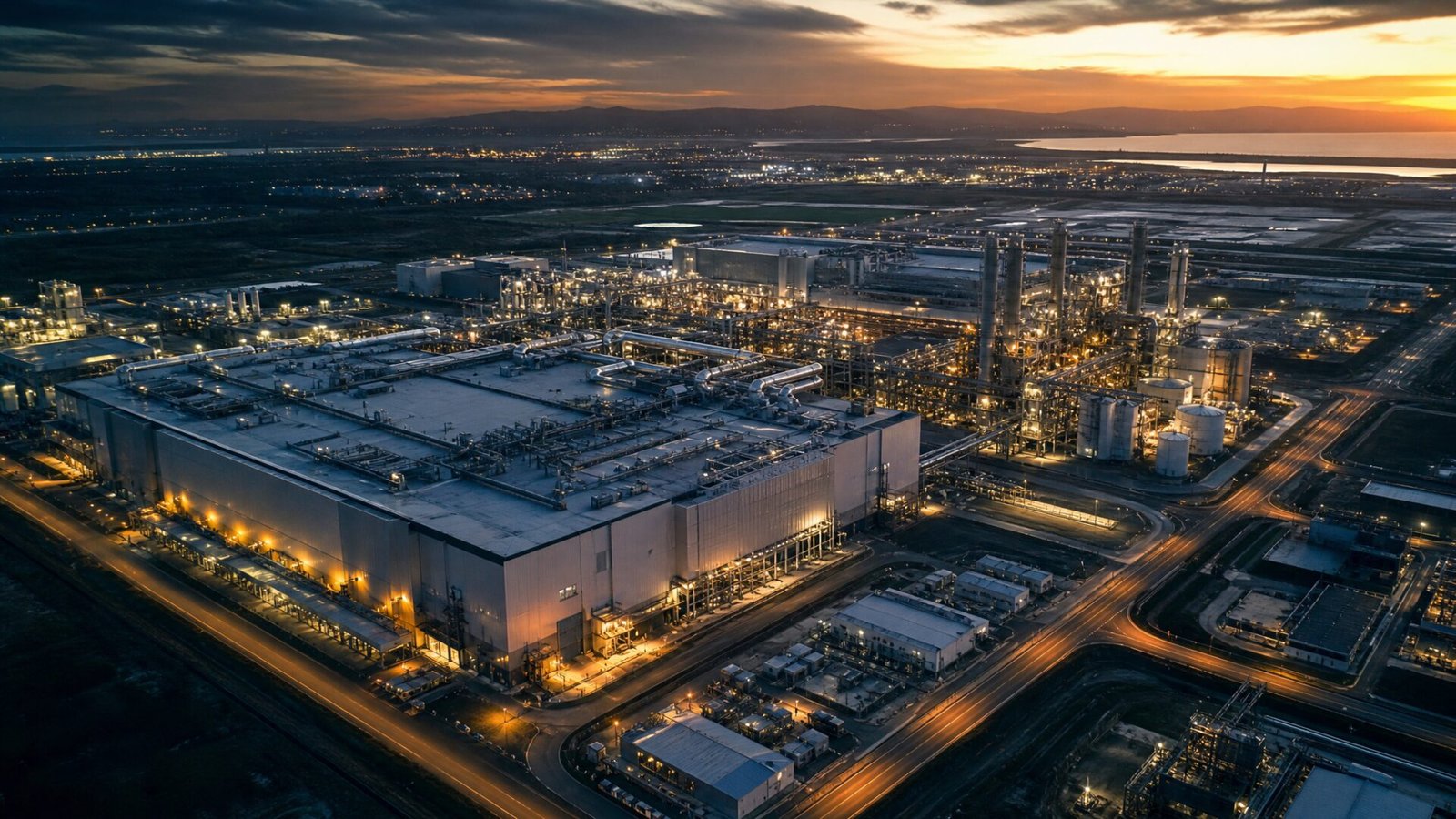
The chips-and-chemicals link is exactly how industrial clusters form. The fab attracts suppliers, suppliers attract their own suppliers, and the region fills with specialised jobs and businesses. For Dholera, that means:
- New industrial activity near the fab, including plants, labs and storage.
- Skilled jobs for chemists, process engineers, quality and safety staff.
- More confidence for other suppliers considering Dholera.
- Long-term stability, as a cluster is stronger than a single factory.
You can read more about the fab in our Dholera semiconductor fab story.
What It Means for Land Buyers
Supplier plants create demand for industrial land, warehouses and housing for staff, usually close to the main fab and along good transport links. But these effects build as plants are constructed and staffed, not overnight. Choose approved, clear-title land with real access to the SIR, the expressway and the airport. Gulfin Aerocity near Pipli junction is one option. As always, returns depend on market conditions.
Reading the signals
The best way to track this story is to watch for concrete steps: land allotted to Fujifilm, construction starting, other chemical or gas companies announcing plants, and the Tata fab moving toward trial production. Each step shows the chips-and-chemicals link getting stronger. Headlines are useful, but site activity on the ground is the real proof that Dholera’s chip cluster is growing.
The Chemistry of a Chip City
Silicon gets the headlines, but chemistry does the work. Every chip that eventually leaves Dholera will have been shaped by dozens of semiconductor chemicals, and some of them may soon be made just down the road. That quiet partnership between Tata’s fab and Fujifilm’s plant may turn out to be one of the most important links in India’s entire chip strategy.
We share semiconductor updates on LinkedIn and on-ground videos on YouTube.
Semiconductor Chemicals: FAQs
What are semiconductor chemicals?
Ultra-pure chemicals used to make chips, including photoresists, developers, etchants, cleaning chemicals and CMP slurries.
Why does Tata's Dholera fab need Fujifilm?
A fab consumes large amounts of ultra-pure materials continuously. A nearby supplier improves reliability, cuts costs and allows faster collaboration on process changes.
What will Fujifilm's Dholera plant make first?
Reports say the first phase will focus on front-end process chemicals, with commercial production targeted for 2027–28.
Will Fujifilm only supply Tata?
Tata Electronics is an important early customer, but Fujifilm has said it expects more front-end facilities in India and plans to serve other customers too.
How does this affect Dholera real estate?
Supplier plants add demand for industrial land, warehouses and staff housing over time, but price growth is never guaranteed.
Follow Gulfin Developers
Site walkthroughs, Dholera updates and new launches, first on our channels.
Recent Posts