Dholera Airport Is Almost Ready. Are You?
In this story
Every great city has a moment when it stops being a plan and starts being a place. For Dholera, that moment may arrive on a runway. Dholera International Airport is now in its final stretch, and the countdown to its first flight is the most-watched timeline in Gujarat real estate. If you own land in Dholera, or are thinking about it, this is the one project you need to understand.
Why does one airport matter so much? Because airports change how people think about distance. A place that takes three hours to reach feels remote. A place with its own international airport feels central. That shift in perception is often what turns a promising region into a busy one.
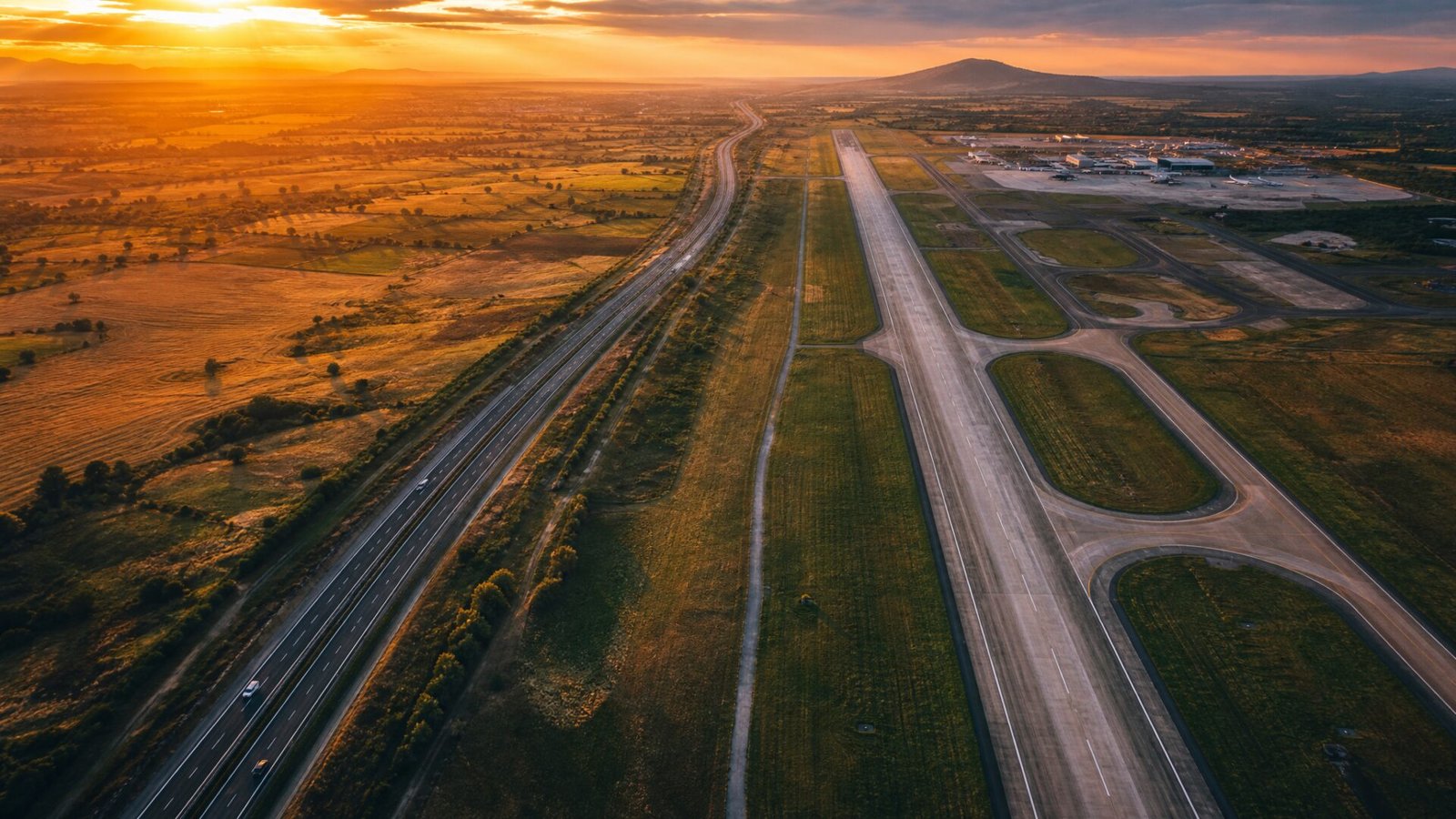
So how close is Dholera to that moment? Closer than most people think. In July 2026, Union Civil Aviation Minister Rammohan Naidu Kinjarapu said the airport was about 80% complete, with the runway, taxiways and air traffic control tower already finished.
Some background first. Dholera Special Investment Region (SIR) covers about 920 sq km, roughly 100 km from Ahmedabad, and is India’s first greenfield smart city on the Delhi–Mumbai Industrial Corridor. It already has the Tata Electronics chip fab under construction, the 109 km Ahmedabad–Dholera Expressway (opened on 31 March 2026) and a growing list of industrial investors.
What it didn’t have was a fast way in for people and cargo from the rest of the world. That is the gap Dholera International Airport is built to fill.

Dholera International Airport by the Numbers
Here is what is being built near Navagam village, about 80 km from Ahmedabad and roughly 20 km from the core of Dholera SIR:
- Site: about 1,426 hectares, with around 75 hectares set aside for commercial development.
- Runway: 3,200 metres, able to handle large Code 4E aircraft.
- Terminal: about 25,000 sq m, with a 2,500 sq m cargo facility.
- Initial capacity: around 2 million passengers a year, with room to grow.
- Phase 1 cost: about ₹1,305 crore, approved in 2022.
The project is run by Dholera International Airport Company Limited, a joint venture of the Airports Authority of India (51%), the Government of Gujarat (33%) and the National Industrial Corridor Development Corporation (16%).
Ground Reality: How Far Along Is Construction?
The heavy lifting began in 2021, when civil works for Phase 1 were awarded. The passenger terminal contract, worth about ₹333 crore, followed in January 2024. By mid-2026 the airside was essentially ready.
- Done: runway, taxiways and air traffic control tower.
- Almost done: the passenger terminal, reported at about 75% in July 2026.
- Next: fit-out, systems testing, safety checks and regulatory approvals.
Officials have spoken of starting operations around September or October 2026. Airport openings often slip by a few months while approvals are completed, so it’s wise to treat these dates as targets rather than promises.
Why the last 20% takes the longest
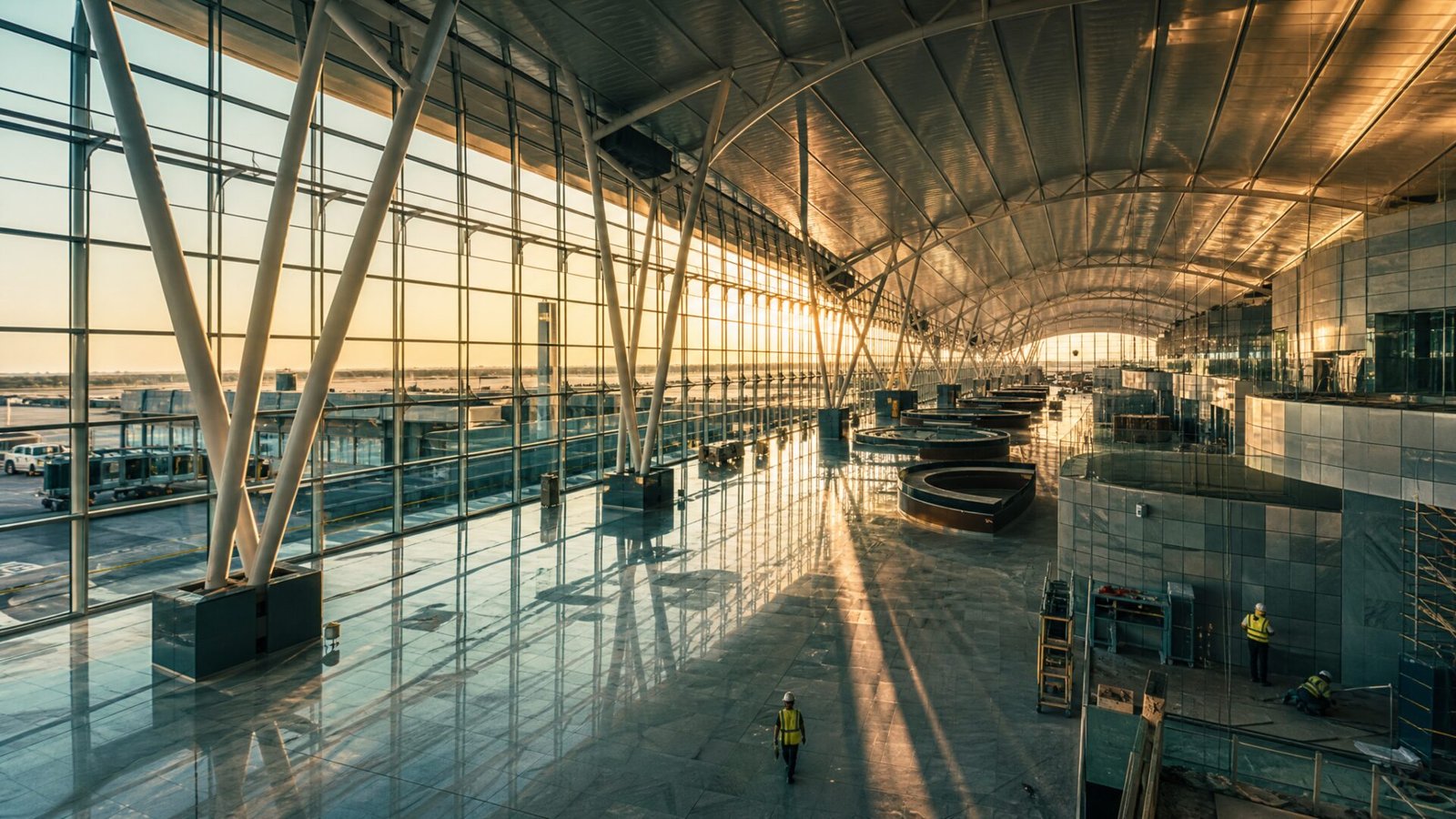
Pouring a runway is visible, fast progress. The final stage is quieter but harder: baggage systems, fire and rescue services, navigation aids, security screening and calibration flights. Each one has to be tested and certified before a single passenger boards. When you hear that an airport is “80% done”, this is the part that remains.
A short history of the airport plan
An airport was part of Dholera’s master plan from the start, because planners knew a new industrial city would need its own gateway. Progress was slow for years while land, funding and design were settled. Things sped up once the Phase 1 budget was approved in 2022 and contractors were on site. The terminal contract of January 2024 came with an 18-month deadline, which is why 2026 has always been the year to watch.
That long run-up is typical of big infrastructure. The first years look quiet from the outside. Then everything seems to arrive at once.
Why Dholera International Airport Changes Everything
Think of the airport as the missing piece in Dholera’s connectivity puzzle. The expressway links Dholera to Ahmedabad by road. A planned high-speed rail corridor will add another link. The airport connects Dholera to the rest of India and the world.
- For industry: chipmakers and electronics firms ship small, high-value goods by air. A cargo terminal on their doorstep saves time and money.
- For executives and engineers: global partners visiting the Tata fab can fly in directly instead of driving from Ahmedabad.
- For Ahmedabad: Dholera International Airport is also meant to ease pressure on Sardar Vallabhbhai Patel International Airport as traffic grows.
- For residents: jobs in aviation, hospitality, logistics and retail start to appear around the airport.
The jobs that follow a runway
An airport is a job engine long before it is busy. Ground handling, security, aircraft maintenance, catering, cargo, taxis, hotels and shops all need people, and most of them need to live nearby. Each new flight route adds more work on the ground. For a young city like Dholera, that steady stream of jobs is what brings in families, and families are what create lasting demand for homes, schools, clinics and markets.
This is also why airports tend to attract the next wave of investors. Hotel chains, warehousing companies and training institutes follow the traffic. Once they arrive, the area around the airport slowly turns into its own business district, with offices, restaurants and residential colonies built around it. Dholera International Airport has land set aside for exactly this kind of growth, so the story of the airport will not end at the terminal doors.
What the Airport Means for Land Around It
Around the world, land near new airports tends to be re-rated once flights begin, because demand rises for hotels, warehouses, offices and homes. Dholera International Airport is likely to follow a similar pattern, though no one can guarantee how fast or by how much.
If you are looking at plots, a few questions matter more than the headlines:
- How far is the plot from the airport and the expressway, in real driving time?
- Is the land NA (non-agricultural) approved with a clear title?
- Can it be registered now, or are you buying a promise?
This is exactly why we built Gulfin Aerocity close to the airport, at Pipli junction: NA-approved, clear-title residential plots that are ready to register.
Judge distance in minutes, not kilometres
Brochures love to say a plot is “near the airport”. A better test is simple: how many minutes does it take to drive there on a real road today? A plot 15 km away on a finished highway can be more useful than one 5 km away down a dirt track. Visit the site, drive the route yourself, and time it.
What to Watch in the Next Six Months
If you want to track Dholera International Airport like an insider, keep an eye on these milestones:
- The aerodrome licence: the regulator’s final approval that allows commercial flights.
- First airline routes: which cities get direct flights, and how often.
- Cargo partners: tie-ups with logistics firms serving the chip and electronics industry.
- Airport commercial land: how the roughly 75 hectares for commercial use are developed, with hotels, offices and warehousing.
- Link roads: faster connections between the airport, the expressway and the SIR’s activation area.
Each of these will tell you more about Dholera’s real momentum than any advertisement.
The Bigger Picture
The airport doesn’t stand alone. It sits alongside the Tata semiconductor fab, large solar parks, new data centre plans and the expressway, all pointing in the same direction. Each one makes the others more valuable. That’s what makes Dholera different from a single-project town: it is being built as a complete system.
You can follow official progress on the Dholera International Airport overview, and we post regular on-ground drone footage on our YouTube channel.
The Final Approach
When the first commercial flight touches down, Dholera International Airport will mark the end of one chapter and the start of another. The quiet years of planning will give way to the busy years of growth. People who understood the timeline early will have had the most choice. Everyone else will be reading about it.
Dholera International Airport: FAQs
When will Dholera International Airport start operations?
Officials have pointed to around September–October 2026 for the start of operations, subject to final testing and regulatory approvals. Dates for new airports often move by a few months.
How far is Dholera International Airport from Ahmedabad?
It is about 80 km from Ahmedabad, near Navagam village, and roughly 20 km from the core of Dholera SIR. The Ahmedabad–Dholera Expressway links the region by road.
How big is the airport's runway?
The runway is 3,200 metres long and can handle large Code 4E aircraft.
Who owns and runs the airport?
Dholera International Airport Company Limited, a joint venture of the Airports Authority of India (51%), the Government of Gujarat (33%) and NICDC (16%).
Will the airport increase land prices in Dholera?
Airports usually increase demand for nearby land, but no one can guarantee price rises. Focus on NA-approved, clear-title plots with good access, and do your own due diligence.
Follow Gulfin Developers
Site walkthroughs, Dholera updates and new launches, first on our channels.
Recent Posts