
Dholera Semiconductor Fab Gets a Global Power-Up
In this story
On 18 September 2026, Tata Electronics confirmed that Malaysia’s Kelington Group will help build the critical systems inside the Dholera semiconductor fab, the US$11 billion chip plant rising in Gujarat. It sounds like a routine contractor deal. It isn’t. If you live in Gujarat, invest in land, or simply want to know where India’s next growth story is being written, this partnership tells you how close Dholera is to making its first chips.
Big factories don’t just make products. They build towns around them. A 300mm chip fab brings suppliers, engineers, housing demand and new roads with it, and every step it takes toward production changes what the land around it is worth. That’s why this small-sounding news matters.
So here’s a question few people ask: what happens between the day a chip plant’s walls go up and the day its first silicon wafer comes off the line? The answer is a slow, exacting process called tool hook-up. It’s the job Kelington has just signed up for, and it’s one of the last big hurdles before production.
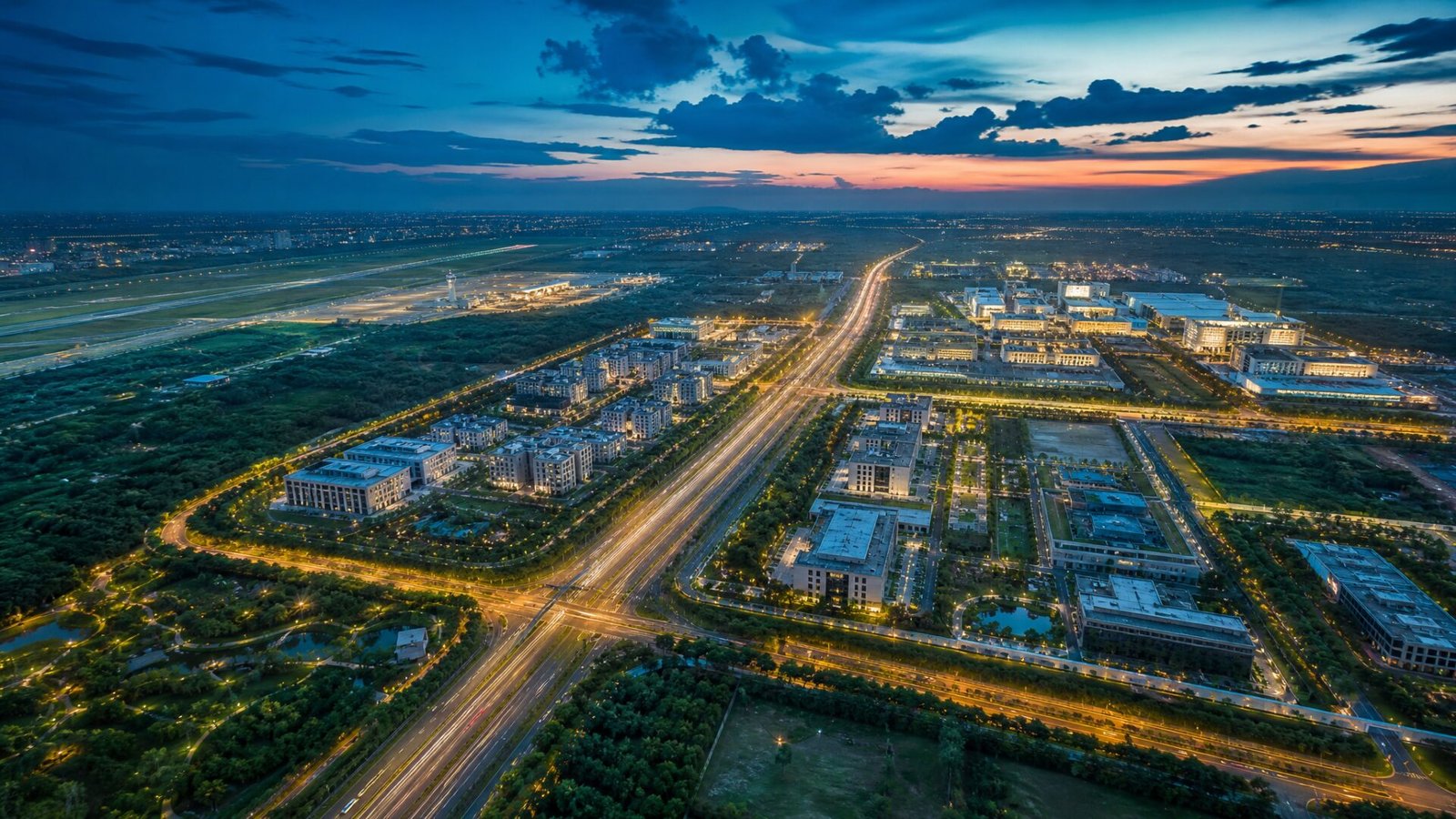
First, some context. Dholera Special Investment Region covers roughly 920 sq km on the Gulf of Khambhat, about 100 km from Ahmedabad. It is India’s first greenfield smart city on the Delhi–Mumbai Industrial Corridor, planned from scratch with wide roads, underground utilities and space set aside for heavy industry. The Ahmedabad–Dholera Expressway and the new Dholera International Airport are being built to serve it.
For years, the obvious question was: who will actually come? The answer arrived when Tata Electronics picked Dholera for India’s first commercial semiconductor fab, built with technology partner PSMC of Taiwan. Suddenly Dholera wasn’t just a plan on paper. It was where India would make its own chips.
What the Tata–Kelington Deal Means for the Dholera Semiconductor Fab
Kelington Group Bhd is an integrated engineering company from Malaysia. It designs, fabricates and installs the ultra-clean gas, chemical and process systems that chip factories run on. Under the new agreement, it will help deliver the critical infrastructure and systems needed for semiconductor manufacturing at the Dholera semiconductor fab. Here are the key points:
- Who: Tata Electronics and Kelington Group Bhd, listed in Malaysia.
- What: Deploying critical infrastructure and systems, including tool hook-up for sophisticated fab equipment.
- Why: To speed up the fab’s readiness for silicon wafer production.
- Beyond the build: Both companies will look at developing local talent and advanced design-and-build engineering skills in India.
Kelington group chief executive Lim Seng Chuan said the partnership was designed for the strict demands of chip manufacturing: “With our shared commitment to excellence in execution, this alliance will support the development of critical infrastructure for the Dholera facility and contribute to the growth of India’s semiconductor industry.”
Tata Electronics CEO and MD Dr Randhir Thakur explained why this piece matters so much: “Tool hook-up is a critical element in establishing a reliable, efficient, and high-performance Fab environment.” You can read the official Tata Electronics announcement and The Star’s report for the full details.
Inside the US$11 Billion Dholera Semiconductor Fab
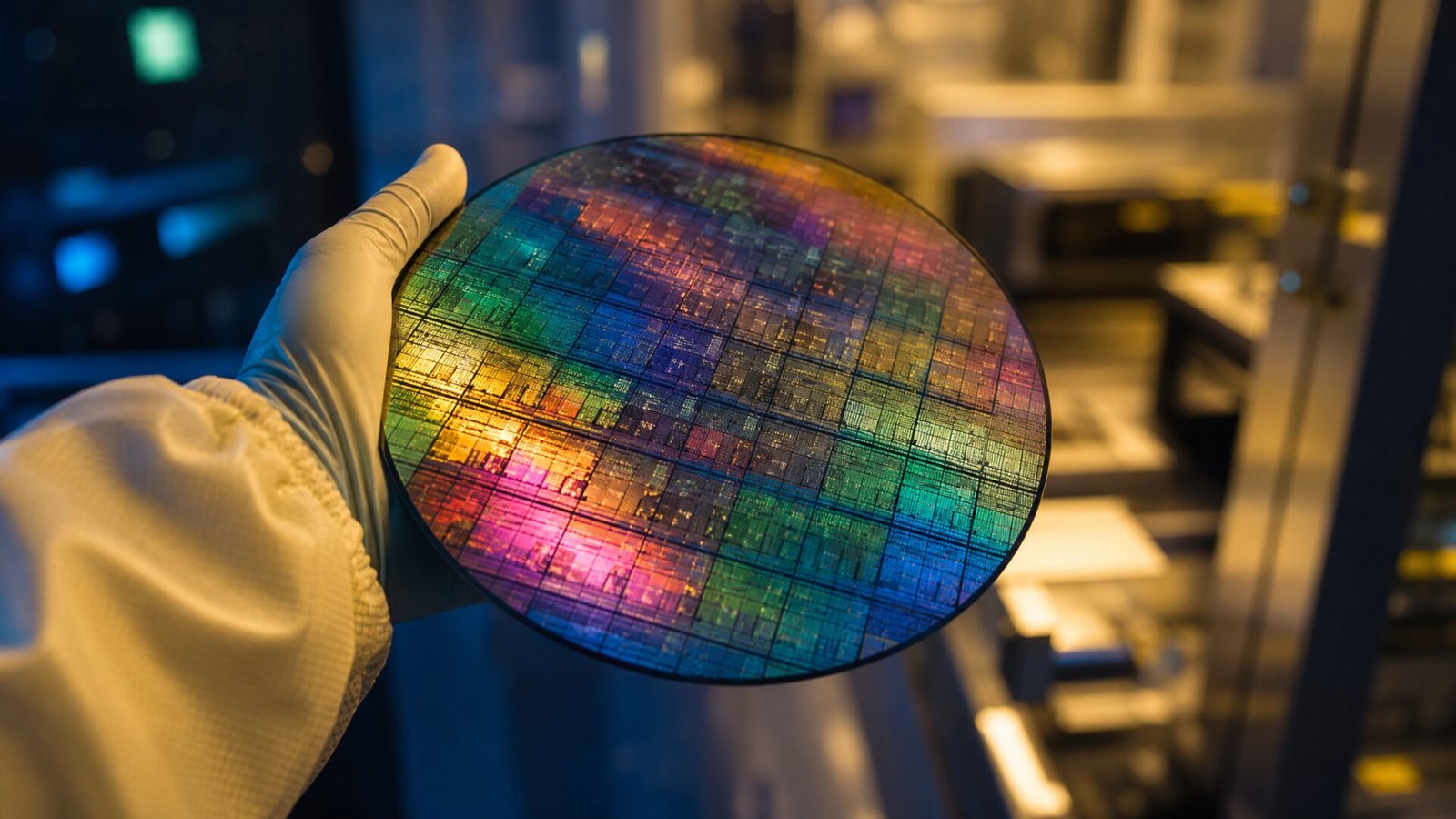
The Dholera semiconductor fab is a 12-inch (300mm) wafer plant backed by a planned investment of about US$11 billion, or roughly ₹91,000 crore. It will make chips for automotive, mobile devices and artificial intelligence, for customers in India and abroad. Tata has spoken of a planned capacity of up to 50,000 wafer starts a month.
Why tool hook-up decides the timeline
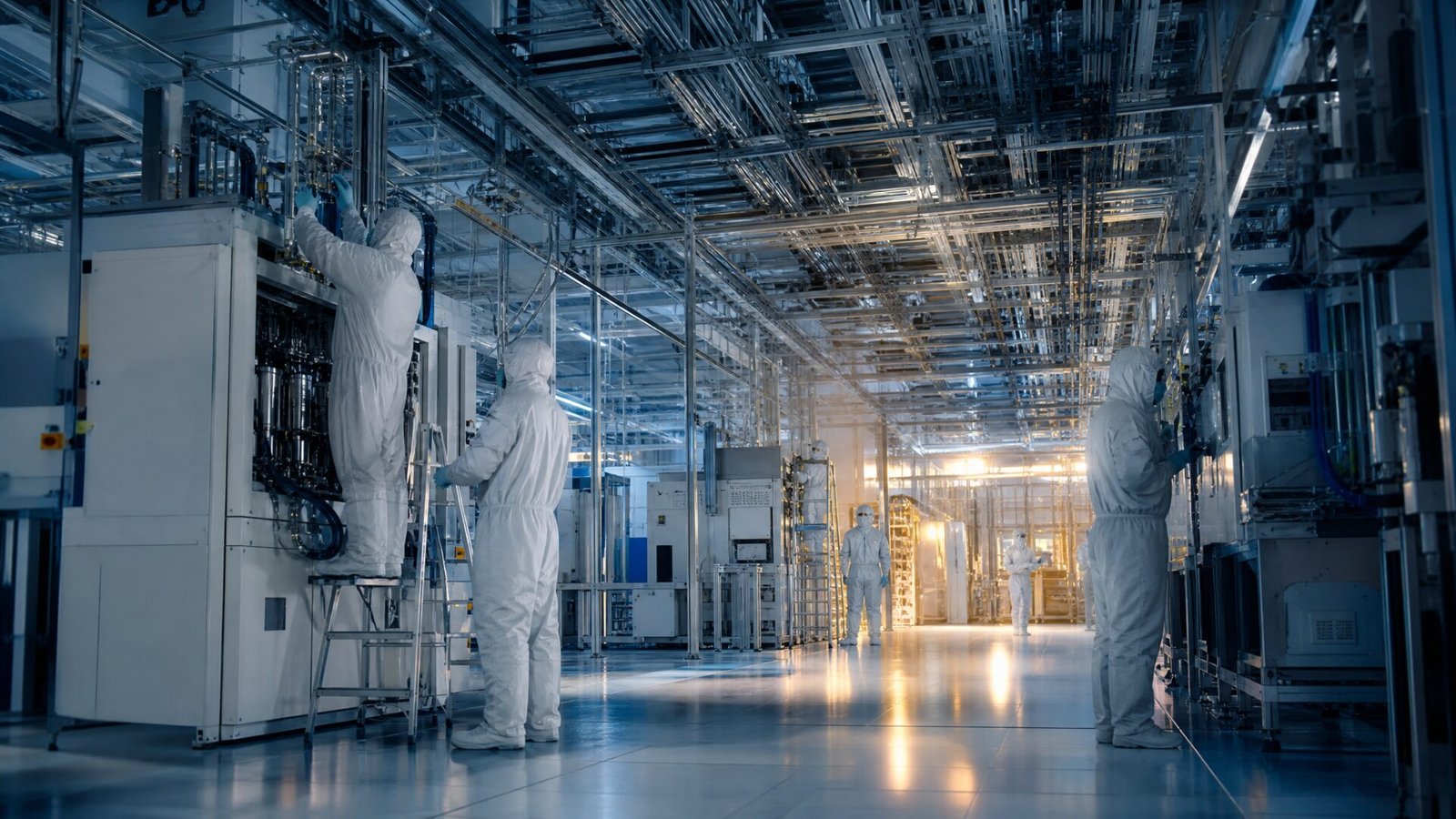
A modern chip plant like the Dholera semiconductor fab holds hundreds of machines, from lithography scanners to etch and deposition tools. Each one has to be connected to ultra-pure gases, chemicals, water, vacuum lines, exhaust and power, with almost no room for error. A single leak or speck of contamination can ruin a whole batch of wafers. That’s why hook-up is often where fab schedules are won or lost, and why Tata brought in a specialist to handle it.
Why 300mm wafers matter
Bigger wafers mean more chips from each production run and a lower cost per chip. For the Dholera semiconductor fab, the 300mm format is key: it’s the global standard for high-volume manufacturing, so it lets Dholera compete for the same customers served by fabs in Taiwan, Korea and the US.
A quick timeline of the Dholera chip story
- February 2024: The Union Cabinet approves the Tata Electronics fab in Dholera, built with Taiwan’s PSMC, at an investment of about ₹91,000 crore.
- March 2024: The foundation stone is laid, and construction of the Dholera semiconductor fab begins.
- 2025–2026: Buildings rise, cleanrooms take shape and global equipment and engineering partners come on board.
- September 2026: Kelington joins to support critical infrastructure and tool hook-up.
- Next: Reports suggest trial production could begin around the end of 2026, followed by a gradual ramp-up to commercial volumes.
Each step on this list made headlines, and each one nudged Dholera a little further from “future city” toward “working city”.
How the Chip Plant Is Reshaping Dholera Smart City
No fab works alone. Kelington is one of several partners Tata Electronics signed up around Semicon India 2026, and each one brings its own teams, offices and suppliers. That ecosystem effect is what turns an industrial project into a living city:
- Jobs: Thousands of direct and indirect roles in engineering, operations, logistics and services.
- Housing and retail: New workers and families need homes, schools, shops and hospitals nearby.
- Connectivity: The Ahmedabad–Dholera Expressway and Dholera International Airport link the region to Ahmedabad and the rest of India.
- More industry: Clean energy, electronics and supplier plants are joining the region, adding to demand.
Every milestone at the Dholera semiconductor fab strengthens the case for the whole region, from the Activation Area to the plots along the airport corridor.
What This Means for Land Investors in Dholera
For land buyers watching the Dholera semiconductor fab, the lesson is simple: infrastructure and anchor industries tend to move before prices do. Here’s what’s worth weighing:
- Choose NA-approved, clear-title plots that are ready to register.
- Stay close to growth corridors such as the airport, the expressway and the industrial zones.
- Think long term. Smart cities grow in phases, and early, patient buyers usually gain the most.
That’s the idea behind Gulfin Aerocity: residential plots near Dholera International Airport with Pipli junction frontage, clear titles and on-spot registry. As always, returns depend on market conditions, so do your own research before you invest.
Questions to ask before you buy
A big headline is a good reason to look at Dholera, but it isn’t a reason to skip the basics. Before you pay a token amount for any plot, get clear answers to these questions:
- Is the land NA (non-agricultural) approved, and is the title clear? Ask to see the documents, not just hear about them.
- Which town-planning zone is the plot in? Residential, commercial and industrial zones grow at different speeds.
- How far is it from the airport, the expressway and the fab? Distance to real infrastructure matters more than distance to a signboard.
- Can you register it now? Ready-to-register plots remove a lot of waiting and risk.
- What are the total costs? Include registration, stamp duty and development charges, so there are no surprises later.
A good developer will answer all of these on your first call and invite you to see the site in person.
The Road Ahead for Dholera
Walls go up, then machines, then the careful work of connecting them all. The Kelington deal shows that the Dholera semiconductor fab is moving firmly into that final stretch. For India, the Dholera semiconductor fab is a step toward making its own chips. For Dholera it’s another signal that the smart city on the Gulf of Khambhat is becoming real. And for anyone watching from the sidelines, the question now is how long you want to keep watching.
Want to see Dholera before you visit? We share on-ground site walkthroughs on our YouTube channel, quick project updates on Instagram, and Dholera news on LinkedIn and Facebook. Follow Gulfin Developers to watch this story unfold.
Dholera Semiconductor Fab: Frequently Asked Questions
Where is the Dholera semiconductor fab located?
It is in the Dholera Special Investment Region in Ahmedabad district, Gujarat, about 100 km from Ahmedabad city and close to the upcoming Dholera International Airport.
Who is building the Dholera semiconductor fab?
Tata Electronics is building and will run the fab, with Taiwan’s PSMC as its technology partner. Kelington Group supports the critical infrastructure and tool hook-up needed to get the plant ready for production.
How much money is being invested?
The planned investment is about US$11 billion, or roughly ₹91,000 crore. That makes it one of the largest single industrial investments in Gujarat.
What will the fab produce?
It will process 12-inch (300mm) silicon wafers into chips for automotive, mobile devices and artificial intelligence, serving customers in India and around the world.
When will production start?
Reports point to trial production around the end of 2026, with commercial volumes building up after that. Timelines for fabs this size can shift, so it’s worth following official Tata Electronics updates.
Will the fab raise land prices in Dholera?
No one can promise that. What is clear is that anchor industries and new infrastructure bring jobs, people and demand for housing and services. Buyers should focus on approved, clear-title land in well-connected locations and do their own due diligence.
Follow Gulfin Developers
Site walkthroughs, Dholera updates and new launches, first on our channels.
Recent Posts